Introduction
In a world where urban development and housing demand are rapidly increasing, the speed and efficiency of planning approval processes are under significant pressure. Traditionally, urban planners, government agencies, and private sector developers have been slowed down by one major bottleneck—decoding and processing decades-old planning documents. These documents often exist only in physical form or as poorly scanned images, riddled with handwritten annotations, smudges, and low-resolution diagrams.
Enter Extract, a pioneering AI tool that promises to solve this problem using advanced machine learning and optical character recognition (OCR). Developed to work specifically with urban planning data, Extract is not just another document digitization platform—it’s a purpose-built AI system designed to read, interpret, and convert outdated or unstructured planning materials into machine-readable data in a matter of seconds.
The Problem Extract Solves
One of the largest barriers to housing and infrastructure development today lies not in construction or funding—but in paperwork. Historical planning documents are often required to validate land use, identify legal constraints, or understand past developments. These may include:
- Blurry or faded maps
- Handwritten planning notes
- Scanned blueprints
- Annotated building diagrams
- Typewritten documents from decades ago
Processing these documents manually can take city officials hours per file, especially when there’s no standardized format. For developers and planners working under tight deadlines or compliance requirements, this delay can derail entire projects.
This is where Extract’s innovation shines—it automates the interpretation of these documents, enabling lightning-fast processing and dramatically improving planning turnaround times.
What is Extract?
Extract is an AI-powered document processing tool tailored for the urban planning and infrastructure development sector. It utilizes advanced OCR, computer vision, and natural language processing (NLP) to analyze a wide variety of document formats and convert them into structured, searchable data.
It can interpret:
- Low-quality scanned documents
- Handwritten and typewritten notes
- Annotated PDFs and images
- Multimodal files containing diagrams and text
Extract not only “reads” the documents, it understands them—detecting references to addresses, zoning codes, planning permissions, historic notes, and much more.
Key Features and Capabilities
1. High-Speed Document Processing
Extract can process a document that might take a human 1–2 hours in just 40 seconds. This performance gain is crucial for government agencies and planning consultants handling large volumes of archival data.
2. Blurry and Low-Quality Input Handling
Unlike generic OCR tools that struggle with poor input quality, Extract has been trained specifically on urban planning documents. This includes blurry scans, faded handwriting, and noisy PDFs—making it extremely robust and reliable for real-world applications.
3. Zoning and Regulatory Intelligence
Extract’s AI can identify key planning data such as:
- Zoning classifications
- Planning permissions
- Regulatory annotations
- Council references This allows for immediate flagging of important constraints or permissions attached to a property or location.
4. Map Interpretation and Cross-Referencing
Extract’s vision AI is capable of interpreting maps and diagrams, correlating text references with visual elements like plot boundaries, infrastructure icons, and directional markings.
5. Searchable, Structured Outputs
Once processed, documents are transformed into machine-readable, searchable formats—often presented in structured datasets or editable documents. These outputs can be integrated into existing GIS or planning platforms.
6. Secure and Scalable Cloud Architecture
Built to handle sensitive governmental data, Extract operates on a secure, scalable cloud framework that ensures:
- Data encryption
- Role-based access controls
- Audit trails for compliance
How Extract Works: Step-by-Step
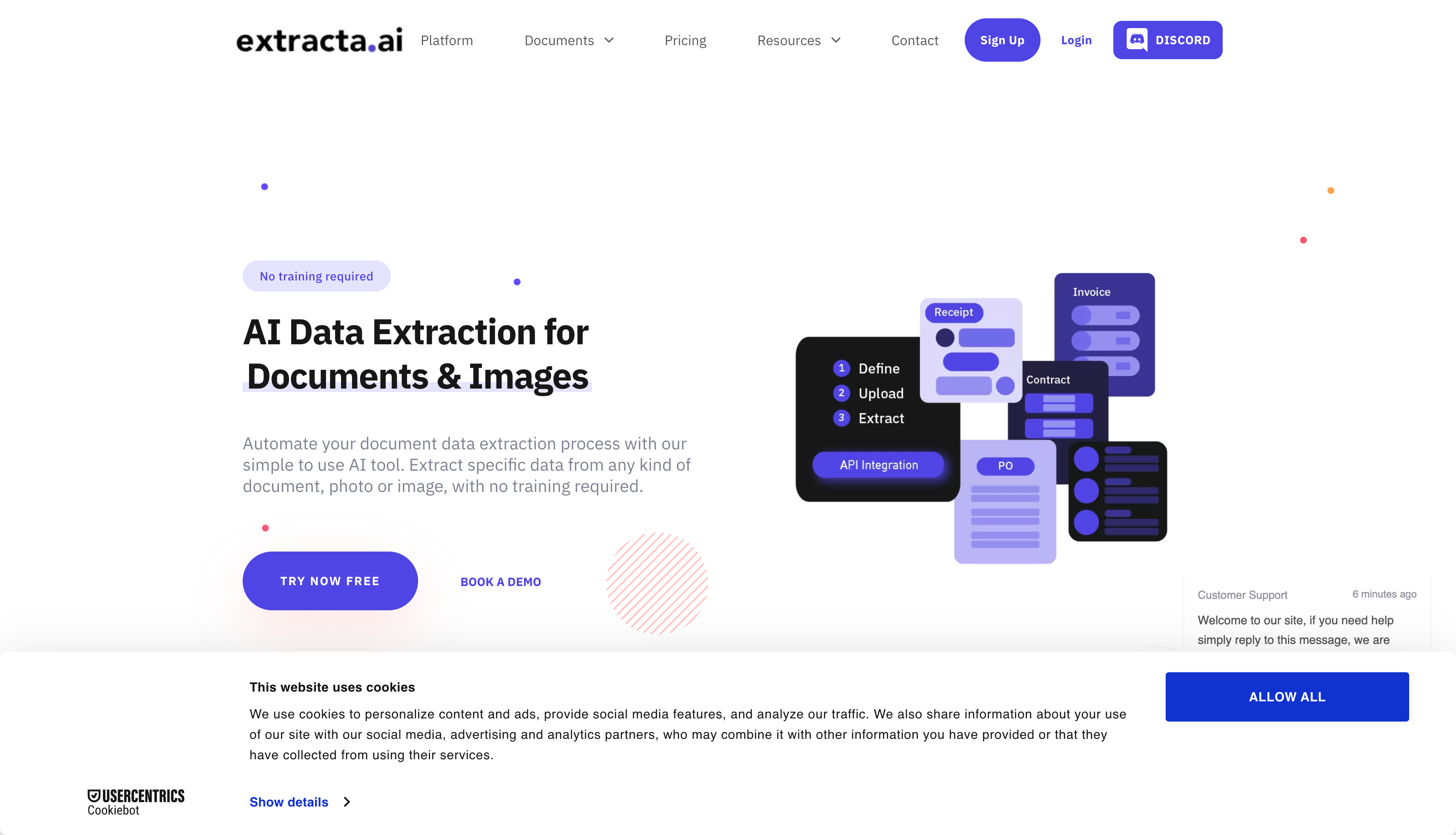
- Upload Document
Users upload scanned documents, maps, or plans via a simple dashboard or API integration. - AI Analysis
Extract runs its AI engine across the document, using layered OCR, NLP, and visual recognition models to interpret and segment content. - Data Structuring
Key information—such as location, zoning codes, permissions, and annotations—is extracted and placed into a structured, searchable format. - Export and Integration
Users can download the structured output or push it into downstream systems like planning software, property databases, or GIS tools.
Real-World Impact
Extract has recently gained attention for being trialed by the UK government as part of efforts to accelerate housing delivery. With a goal to reduce bottlenecks in the planning approval process, Extract offers a transformative solution to a problem that has persisted for decades.
Example Use Case: A Planning Authority
A regional council working through thousands of scanned planning application documents was struggling to respond to developer queries within statutory timelines. By implementing Extract, they were able to reduce document processing times by over 90%, improving efficiency and public service delivery.
Who Can Benefit from Extract?
- Local Governments and Planning Departments
To process historical archives faster and support modern planning workflows. - Urban Planners and Architects
For rapid access to zoning and planning constraints on parcels of land. - Property Developers
To reduce time-to-market by eliminating delays in document analysis. - Infrastructure and Utility Companies
To align historical records with current planning data and inform construction.
Technology Stack Behind Extract
While specific technical details are proprietary, Extract likely leverages:
- Deep OCR Engines: Custom-trained models that outperform generic OCRs on noisy, handwritten, or low-quality inputs.
- Multimodal AI: Fusion of vision (image) and language models to interpret maps and associated text concurrently.
- Cloud-Based Infrastructure: For scalable, secure processing of high volumes of data.
- APIs: To integrate with document repositories, planning databases, and third-party platforms.
The Vision Behind Extract
The creators of Extract envision a world where outdated documentation no longer impedes progress. The aim is to liberate planning data—unlocking insights from decades of documents that are otherwise forgotten or buried in archives. By making historical data accessible and actionable, Extract is playing a key role in driving smarter, faster, and more transparent urban development.
Challenges and Considerations
Despite its promise, tools like Extract must also address a few challenges:
- Accuracy with Extremely Degraded Documents
- Handling Multiple Layout Styles Across Councils
- Maintaining Privacy in Sensitive Applications
- Human-in-the-loop Validation for High-Stakes Decisions
To mitigate these, Extract supports auditable outputs and allows for manual review when needed.
The Future of Extract
With growing pressure on governments to improve housing availability and infrastructure responsiveness, Extract is likely to play a larger role in digital transformation strategies. Potential future directions include:
- Integration with 3D maps and spatial planning tools
- Support for real-time collaboration on planning cases
- AI-driven recommendations based on zoning data
- Predictive planning and forecasting using historical trends
Conclusion
Extract isn’t just another AI document tool—it’s a mission-driven platform tackling one of the most entrenched inefficiencies in urban development. By making historical planning data readable, actionable, and fast to access, Extract is enabling a new era of digitally-enabled planning—one where time-to-approval shrinks, transparency increases, and smart cities can evolve with fewer bureaucratic hurdles.